


News Blog
Latest news on Spanish companies and economy

José Elías lashes out at the situation of Spain's self-employed: “They are the new slaves of society,” and blames the system for the problem.
Renowned billionaire entrepreneur José Elías has launched a harsh critique of the current situation faced by self-employed workers in Spain, going so far as to provocatively label them the 'new slaves of society'. This blunt assertion stems from his observation of the extreme difficulties this group must overcome daily to make their projects and businesses viable. According to Elías, the problem does not lie in a lack of effort or ability on the part of individuals, but is a direct consequence of a system that imposes disproportionate burdens and offers scant guarantees of success or stability. In the article published by La Razón, it is highlighted that Elías is fully aware of the economic reality that suffocates the self-employed. His analysis points to the current system acting as a brake on the personal and professional development of millions of people who are trying to undertake ventures in the country. By directly blaming the system, the entrepreneur suggests that the policies in force and the tax and administrative structure are designed in such a way that real progress for self-employed workers is hindered, keeping them in a constant survival cycle. José Elías's view focuses on the need for a thorough review of the working and fiscal conditions of the self-employed. By using the metaphor of modern slavery, he seeks to draw attention to the lack of economic freedom and the constant pressure to which they are subjected. This public denunciation by one of the most influential figures on the Spanish business scene underscores the urgency of addressing the reforms needed to protect a sector that is vital to the productive fabric, but which, in his words, is in a state of extreme vulnerability due to the structural deficiencies of the Spanish economic model.

From Málaga to the world: the Spanish company with a solution to three of the planet’s greatest environmental threats.
Nautilus Maritime Dredging, a company with its operational base in the Port of Malaga, has positioned itself as a global technological reference by offering innovative solutions to three of the most critical environmental challenges currently affecting aquatic ecosystems: the invasion of Asian algae, the silting of rivers and reservoirs, and the degradation of seabed and coastal areas. Although it has been formally established in Spain for barely two years, the company counts on the solid backing of more than 25 years of international experience accumulated by its managers in projects developed in northern Europe, especially Norway. This trayectoria has allowed them to introduce in the Spanish market machinery and exclusive technical procedures that are transforming the management of aquatic environments. One of the fundamental pillars of its technological proposal is the fight against the proliferation of the invasive alga Rugulopteryx okamurae, a species native to the Pacific that is devastating the coasts of the Mediterranean and the Atlantic. Unlike traditional methods, which are limited to reactive beach cleaning once the algae has already reached the shore — generating millions in costs for municipalities and serious problems of odors and public health — Nautilus proposes a paradigm shift: preventive interception at sea. Through a patented system that combines floating and submerged containment barriers with the use of high-capacity amphibious dredgers, the company is able to capture and remove large masses of algae before they impact the coastline. This approach not only protects tourism and fishing activities but also facilitates the possible recycling of the collected biomass. The second major axis of the Málaga firm’s action is the recovery of storage capacity in vital water infrastructure such as rivers and reservoirs. The progressive accumulation of sludge and sediments is a strategic problem in a country like Spain, where water is a scarce and essential resource. Nautilus employs sustainable dredging technology that allows the selective extraction of these sediments and their subsequent hydraulic transport through closed conduits to distances that can reach up to 11 kilometers. This innovative method eliminates the need to use heavy earthmoving machinery and the constant transit of trucks through rural or urban areas, drastically reducing the carbon footprint and the acoustic and environmental impact of the operations. Finally, the company stands out for its capability to regenerate aquatic funds and environmental dredging in ports through high-precision interventions. Its fleet includes the largest amphibious dredger in the world in its category, a unique machine designed to operate in hard-to-access environments where conventional equipment encounter insurmountable limitations. With a pumping capacity of up to 1,000 cubic meters per hour, this technology allows action with minimal invasiveness, extracting only the targeted materials and preserving the integrity of the surrounding ecosystem. Recently honored with the prestigious PROA 2026 Blue Economy Award, Nautilus Maritime Dredging represents the vanguard of environmental engineering from Andalusia, offering an effective response to threats that until now lacked viable large-scale technological solutions.
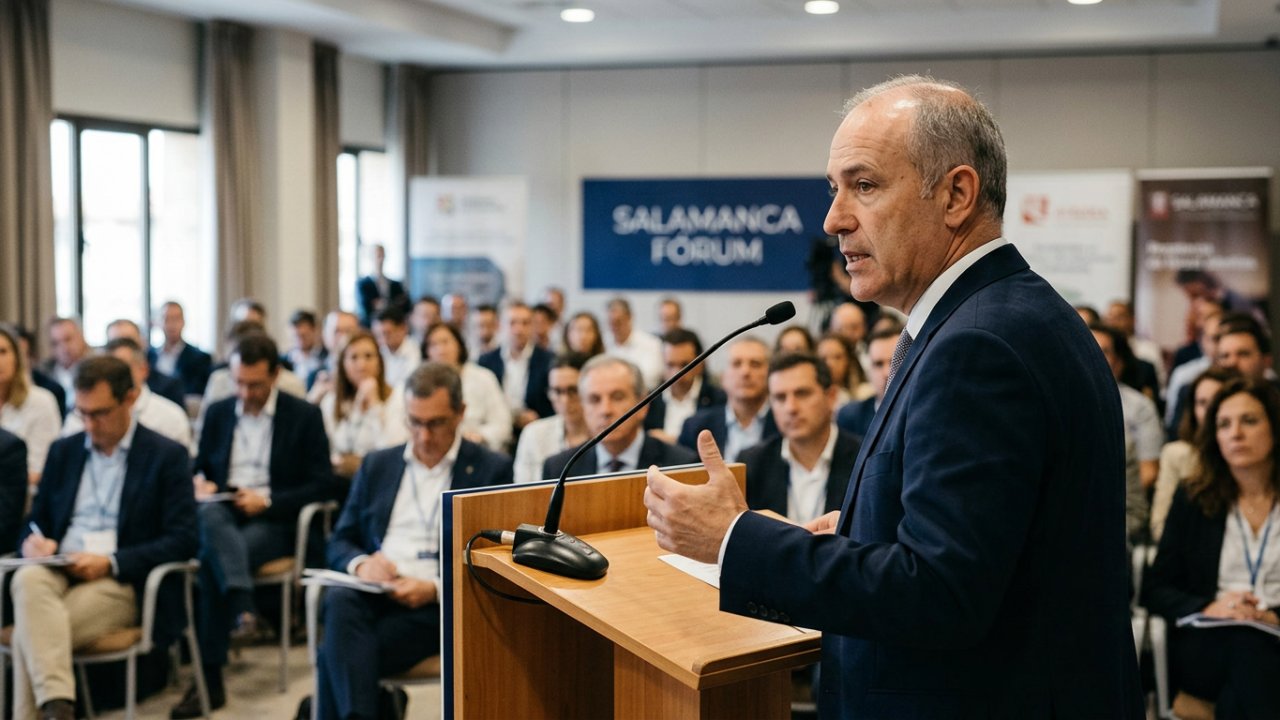
The Government of Spain has constantly attacked the figure of the entrepreneur, and that is attacking the welfare state.
Within the framework of the Salamanca Fórum 2026, an event of international relevance organized by the University of Salamanca (USAL), a roundtable was held titled "Economic and Social Responsibility in Ibero-America." During this gathering, which brought together prominent leaders from the corporate, institutional, and academic spheres, the fundamental role of companies in the development of contemporary society was analyzed. The session was moderated by Santiago López, professor of Economics and Economic History at USAL, and featured key figures such as Isidoro Alanís, president of Global Exchange; Paulino Benito, president of the employers’ association CEOE-CEPYME Salamanca; Orlando Isidoro Afonso Rodrigues from the Bragança Polytechnic Institute; Omar González, president of the Trinity Group; and Ester del Brío, professor and former senator. The most outstanding and critical intervention was that of Isidoro Alanís, who openly questioned the current perception of corporate social responsibility. Alanís asserted, with force, that "the Government of Spain has continually attacked the figure of the entrepreneur, and that is an attack on the Welfare State." According to the president of Global Exchange, the true responsibility of a company lies in its ability to generate profits and, consequently, to create stable jobs. He argued that without a strong and respected business fabric, the sustenance of public services and social welfare is seriously compromised. His words reflected a deep discontent in the private sector toward what they regard as a lack of institutional support and political rhetoric that stigmatizes entrepreneurial activity. For his part, Paulino Benito focused his speech on the importance of employers’ organizations as pillars of labor stability. Benito explained that, at the institutional level, their work consists of organizing labor in a balanced manner between employees and employers, with the ultimate objective of ensuring that companies continue to function and generate employment. This view complemented Alanís’s, underscoring that wealth creation is a collective effort that requires a framework of legal security and mutual respect. The Salamanca Fórum 2026 did not solely center on criticism but sought to recover the intellectual roots of the School of Salamanca. This sixteenth-century movement laid the foundations of international law and modern economics, and the forum intends to use that legacy to propose ethical solutions to the challenges of the twenty-first century, such as artificial intelligence, sustainability, and international cooperation. Orlando Isidoro Afonso Rodrigues contributed the academic and cross-border perspective, highlighting the need for university training aligned with labor market demands. Omar González shared his experience in managing large corporations and the importance of ethics in strategic decision-making. Finally, Ester del Brío offered an integrative view on how public policies must encourage innovation. The debate highlighted that there is a consensus on the need to protect the figure of the entrepreneur as an indispensable driver of social prosperity.

The world's largest meat company is facing a deluge of lawsuits over the deforestation of the Amazon.
An international coalition of lawyers and activists, named the Transnational Legal Coalition (TLC), has launched an unprecedented legal offensive against JBS, the world's largest meat processing company. The legal action consists of the coordinated filing of 14 lawsuits in four European jurisdictions: the United Kingdom, Ireland, Germany, and the Netherlands. The aim of these complaints is not only the Brazilian-origin meat giant, but also the financial institutions and investment funds that support its operations, including heavyweight names such as Barclays, Standard Chartered, Bank of Montreal, Banco do Brasil, Rabobank, ING Bank, and the asset manager BlackRock. The legal strategy chosen by the coalition is innovative and focuses on alleged money laundering. The plaintiffs contend that industrial cattle farming is the main driver of deforestation in the Amazon and that JBS directly benefits from the illegal destruction of the forest for pasture creation. According to the legal reasoning presented, obtaining economic gains from an environmental crime such as illegal deforestation falls within the definition of money laundering in several European countries. This avenue aims to hold financial actors accountable for not conducting the due diligence necessary to prevent their capital from financing criminal activities against the ecosystem. The offensive has the backing of organizations with extensive experience in climate litigation, such as the Global Legal Action Network (GLAN). Gerald O’Quinn, director of GLAN, has noted that although for years various Indigenous groups and activists have fought fragmented battles against land occupation in Brazil, this new coalition is formed to unify efforts and strike at the financial infrastructure that makes the destruction of the jungle profitable. A study by AidEnvironment, cited in the lawsuits, links JBS to deforestation of more than 16 million acres, considering both its direct and indirect suppliers. Beyond biodiversity impact, the lawsuits highlight JBS’s contribution to climate change. Recent investigations indicate that the company’s operations emit a methane quantity comparable to that of oil giants like ExxonMobil and Shell. For its part, JBS has historically defended its environmental commitments for its direct operations but acknowledges difficulties in controlling the traceability of its global network of indirect suppliers, the point where activists place the greatest focus of irregularities. With this torrent of lawsuits, the TLC aims to establish a legal precedent that prevents European financial actors from profiting from the degradation of biomes critical to global climate stability.

Level UP achieves the Guinness World Records™ for the largest entrepreneurship lesson with nearly 4,000 entrepreneurs at Roig Arena.
Level UP Business School has marked a historic milestone in the Spanish business landscape by officially securing the Guinness World Records™ title for the world’s largest business entrepreneurship lesson. The event, dubbed Level UP Business Summit, took place at the imposing Roig Arena in Valencia, the city’s new epicenter for major events, and managed to bring together almost 4,000 entrepreneurs, founders, and executives from all corners of Spain. This impressive attendance figure was audited and certified in real time by an official Guinness judge, reinforcing this gathering as the largest in-person business conference held to date in the Spanish language. The initiative, led by Carlos Delgado, founder and CEO of Level UP, was born with a clear and ambitious mission: to advocate the crucial role played by small and medium-sized enterprises (SMEs) and the self-employed as the true engine that sustains the economy and employment in the country. The choice of Roig Arena as the scene underscores the magnitude of an event that sought to move business leaders out of their daily surroundings and place them at the center of public debate. During the intense day, an alarming statistical reality provided by the National Institute of Statistics (INE) was addressed: less than 42% of companies created in Spain manage to survive beyond their fifth year, with the first year being the most critical for the survival of new ventures. To offer practical solutions to these challenges, the Business Summit brought together a lineup of top-level speakers. Figures such as Kike Sarasola, founder of Room Mate Hotels; the renowned entrepreneur in the food sector Enrique Tomás; athlete and symbol of perseverance Álex Roca; Olympic gymnast Almudena Cid; the communicator and adventurer Jesús Calleja; and talent management experts such as Luis Galindo shared their journeys and life lessons. Through inspiring talks and technical roundtables, vital topics for the health of any business were addressed: from the importance of financial planning and pricing to the emotional management of failure and the ability to adapt to market uncertainty. One of the most enriching moments was the debate on transforming traditional sectors, where the importance of constant innovation and the need to delegate functions to allow the business owner to focus on strategy rather than daily operations were highlighted. In addition, a call was made to institutions to guarantee greater regulatory stability that allows companies to plan in the long term without constant legislative changes. With more than fourteen years of experience and having impacted the training of over 60,000 entrepreneurs, Level UP has demonstrated with this record that the unity of the business fabric is key to building a stronger economy. The event was not only a master class but an unprecedented networking space where synergies were generated among professionals from such diverse sectors as industry, technology, and services, all united by the common goal of growing their businesses and, with them, the country’s future.
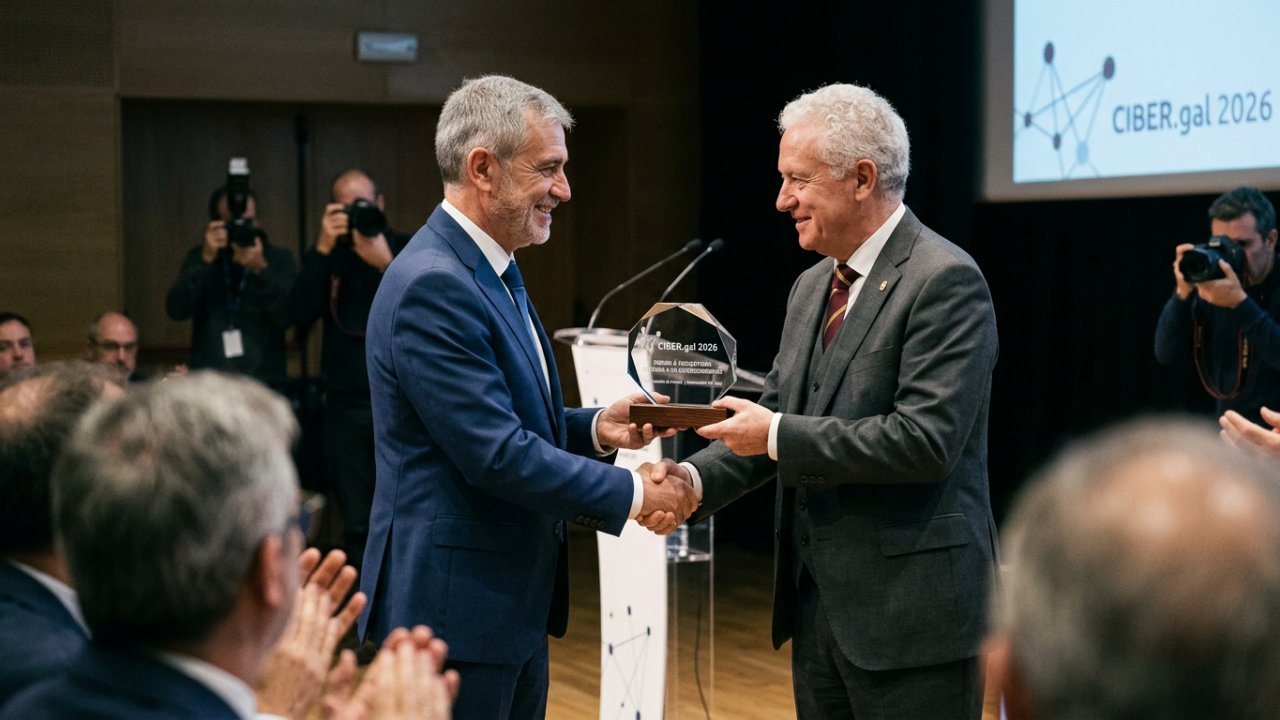
The R Chair in Cybersecurity, CIBER.gal prize.
The R Chair in Cybersecurity has been distinguished with the prestigious CIBER.gal 2026 award in the category of best “Initiative aimed at the business fabric.” This recognition, awarded during the first day of the VI Galician Cybersecurity Meeting held in Santiago de Compostela, highlights the sustained commitment of this public-private alliance to strengthen digital security in Galicia. The award was received by Susana Rey, from the Privacy Office of R, who was accompanied by María Llorente, from the Empresas Marketing area of the operator, and by the academic directors of the chair: Ana Fernández Vilas, from the University of Vigo (UVigo), and Carlos Dafonte, from the University of A Coruña (UdC). Founded in 2018, the R Chair results from a strategic collaboration between the Galician telecommunications operator and the two universities mentioned. Its main objective has always been to accompany the region’s digital transformation process through specialized training, cutting-edge research, and the transfer of technological knowledge to businesses and public administrations. During the awards ceremony, Susana Rey stressed that the project is a quintessential example of coordination between the public and private sectors, a synergy that has allowed adapting university talent to the real needs of the labor market over the last eight years. The chair’s impact on the Galician tech ecosystem is notable. Since its inception, more than 500 students have participated in its various training and outreach activities. The initiative does not focus solely on academic theory, but prioritizes practical experience; in fact, 70% of its funding is allocated directly to scholarships and curricular and extracurricular internships. This commitment to employability has borne tangible fruit, facilitating permanent contracts for at least nine participants after completing their internship periods at the company R. In addition to training, the R Chair has promoted more than 20 technical and social outreach actions and has awarded more than 15 academic prizes to encourage excellence among students of computer science and telecommunications. Its current activity places special emphasis on innovation in smart technologies, such as artificial intelligence applied to business, and on addressing the cybersecurity challenges posed by accelerated digitalization. The collaboration also extends to other research centers and reference entities in Galicia, such as CITIC, atlanTTic, and Gradiant, as well as to leading companies like Microsoft, Finsa, and Hijos de Rivera. In summary, the CIBER.gal 2026 award recognizes a track record of success in attracting ICT talent and in creating a safer digital environment for Galicia’s business fabric. The renewal of the commitment between R and the universities guarantees that the chair will continue to be a fundamental pillar for technological innovation and the protection of digital assets in the autonomous community.

The Island's companies compete in the international market.
The business forum "From the Balearic Islands to the World: Innovation and Leadership," organized by Banco Santander in collaboration with the newspaper Ultima Hora, became a key meeting point to analyze the state of the Balearic economy and the challenges of internationalization. The event, held in Palma, featured prominent figures from the institutional and business spheres, focusing the debate on how innovation, specialization, and talent are the fundamental engines for island companies to compete successfully in the global market. The president of the Government of the Balearic Islands, Marga Prohens, was in charge of inaugurating the event. In her speech, Prohens underscored the strategic importance of research and Artificial Intelligence (AI) as indispensable tools to attract new investments and retain local talent. The president highlighted the work of the Project Accelerator Unit, which has already received more than 50 business initiatives, and valued cutting-edge technological infrastructures such as Parc Bit and the supercomputer, which place the Balearics in a privileged position to lead digital transformation in the Mediterranean. One of the central moments of the forum was the roundtable that brought together representatives from three Balearic companies that have managed to expand their business beyond national borders. Among the speakers were Javier Coll, executive at Hyatt (formerly Apple Leisure Group), and Jaume Gelabert, CEO of Galatzó, who shared their experiences on the challenges of international expansion. Participants agreed that the key to success lies in the ability to adapt to different markets without losing the essence and quality that characterizes the Balearic product. It was also discussed the need to foster a culture of constant innovation to maintain competitiveness in an increasingly demanding global environment. For his part, the vice president and minister of Economy, Finance and Innovation, Antoni Costa, offered an optimistic view of the financial health of the autonomous community. Costa described the economic situation of the Balearics as "frankly positive," providing significant data such as the growth of Gross Domestic Product (GDP) in real terms, which has increased by 46.5% between 2001 and 2025. This sustained growth supports the resilience of the islands’ business fabric, especially in key sectors such as tourism and services, which continue to be the pillars of the region’s economy. The meeting concluded with a reflection on the future, highlighting that, although the outlook is favorable, companies must continue investing in training and attracting specialized talent to face technological changes and the new demands of the international market. The day reaffirmed the commitment of institutions and the financial sector to supporting the growth and international projection of Balearic companies.

COFIDES injects around 50 million into Europastry to boost its push into the U.S. market.
COFIDES has formalized an investment of €49.6 million in Europastry through the Fund for Investments Abroad (FIEX) to support the capital increase of the multinational and the acquisition of 100% of Highland Baking, an American bakery company oriented to the food-service channel. The operation, within the framework of a total expansion of €300 million led by MCH Private Equity, seeks to consolidate Europastry's presence in North America, increase its productive capacity and leverage the distribution network and knowledge of the local consumer. Europastry, headquartered in Barcelona and with a catalog of more than 4,900 references, aims to scale its global turnover and reinforce its position among the largest operators in the sector, also counting on the institutional backing provided by COFIDES.

Glovo entrusts the leadership in Andalusia to engineer Iñaki Gual.
Glovo has announced the appointment of Iñaki Gual as the new regional director for Andalusia. An industrial engineer from EUSS and with more than ten years of experience, Gual returns to the company after having been responsible for expansion in the region for more than three years and after an entrepreneurial stint at an artificial intelligence platform. From the regional headquarters in Seville he will lead the acquisition and loyalty of merchants, in addition to driving the digitization of local commerce. Glovo has more than 5,000 associated establishments in Andalusia — 85% SMEs — and a presence in 70 localities. One of the objectives set is to increase the network of associated merchants by 10% by 2027, expanding categories such as supermarkets, parapharmacy, and express deliveries.